
In this article, Learn the basic rules and regulations of cricket in this complete beginner’s guide. Understand cricket formats, scoring, wickets, overs, fielding rules, and match regulations easily.
Basic Rules and Regulations of Cricket
Cricket is one of the most popular sports in the world, followed passionately in countries like India, Australia, England, Pakistan, South Africa, and New Zealand. Whether you are a beginner or someone trying to understand the game better, learning the basic rules and regulations of cricket is essential.
This guide explains cricket rules in simple language, including scoring methods, player roles, dismissals, overs, and match formats.
What is Cricket?
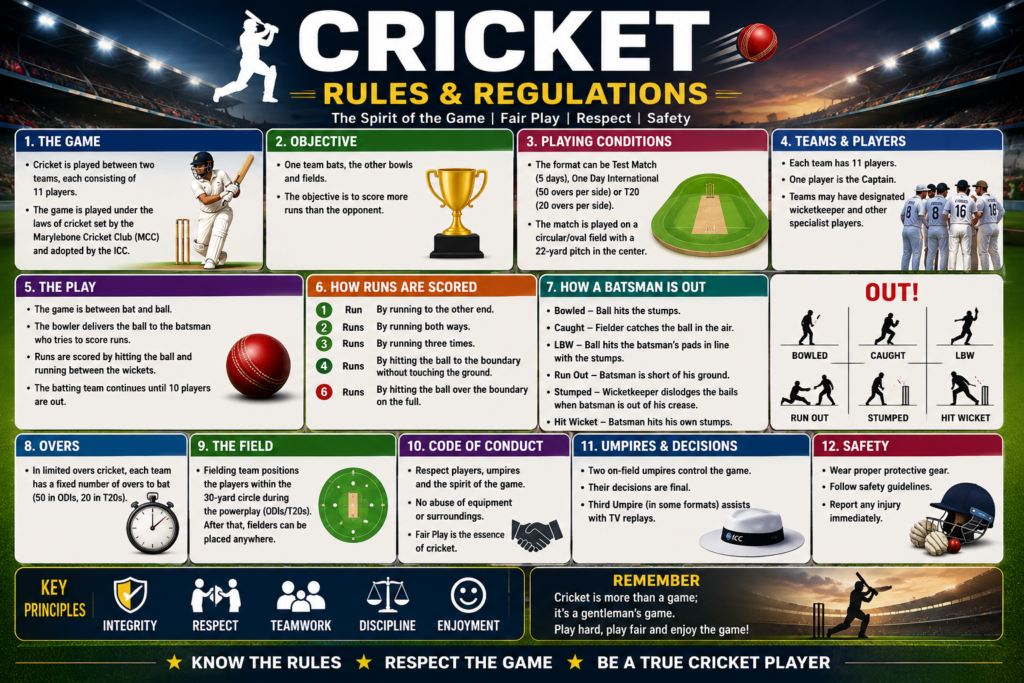
Cricket is a bat-and-ball sport played between two teams consisting of 11 players each. The main objective is to score more runs than the opposing team while following the rules set by the International Cricket Council.
The game is played on a circular or oval-shaped ground with a 22-yard pitch at the center.
Basic Structure of a Cricket Match
A cricket match involves:
- Two teams of 11 players
- One batting side
- One bowling and fielding side
- Umpires to control the match
- Overs consisting of six legal deliveries
The team that scores more runs wins the match.
Cricket Match Formats
1. Test Cricket
- Played over five days
- Each team gets two innings
- Considered the longest and most traditional format
2. One Day International (ODI)
- Each team plays 50 overs
- Match usually finishes in one day
3. Twenty20 (T20)
- Each side gets 20 overs
- Fast-paced and highly entertaining format
Popular tournaments like the ICC Cricket World Cup and Indian Premier League use these formats.
Important Cricket Rules
1. Toss Rule
Before the match starts, the captains toss a coin. The winning captain chooses whether to:
- Bat first
- Bowl first
This decision depends on pitch conditions, weather, and match strategy.
2. Overs in Cricket
An over consists of six legal balls bowled by a bowler.
- ODI Match: 50 overs per team
- T20 Match: 20 overs per team
- Test Cricket: Unlimited overs within scheduled days
3. Scoring Runs
Runs are scored when batters run between the wickets after hitting the ball.
Additional ways to score include:
- Boundary Four: Ball touches the ground before crossing boundary
- Six: Ball crosses boundary without touching the ground
- Extras:
- Wide ball
- No-ball
- Bye
- Leg bye
4. Wickets and Dismissals
A batting player can get out in several ways.
Common Types of Dismissals
Bowled
The ball hits the stumps and dislodges the bails.
Caught
A fielder catches the ball before it touches the ground.
LBW (Leg Before Wicket)
The batter blocks the ball with the leg in front of the stumps illegally.
Run Out
Fielders break the stumps before the batter reaches the crease.
Stumped
The wicketkeeper removes the bails while the batter is outside the crease.
5. Powerplay Rules
In limited-over cricket, fielding restrictions apply during powerplays.
- Only a certain number of fielders are allowed outside the 30-yard circle
- Encourages attacking batting
6. No-Ball and Free Hit
No-Ball
Declared when:
- Bowler oversteps crease
- Dangerous bowling occurs
- Illegal field placement happens
Batting side gets:
- One extra run
- Extra delivery
Free Hit
In limited-overs cricket, the next delivery after certain no-balls becomes a free hit where the batter cannot be dismissed in most ways.
7. Wide Ball Rule
A ball bowled too far from the batter’s reach is called a wide ball.
- One extra run awarded
- Delivery does not count in the over
8. Fielding Rules
Fielders must:
- Stay inside field boundaries
- Avoid unfair obstruction
- Follow powerplay restrictions
The wicketkeeper stands behind the stumps to catch or stump the batter.
9. Umpires and Decision Review System (DRS)
Cricket matches are controlled by:
- Two on-field umpires
- Third umpire (TV umpire)
- Match referee
Modern cricket also uses the Decision Review System (DRS) to review close decisions.
10. Winning the Match
A team wins by:
- Scoring more runs
- Taking all wickets
- Chasing target successfully
Matches can also end as:
- Tie
- Draw
- No Result
Cricket Equipment Rules
Players use:
- Cricket bat
- Protective pads
- Gloves
- Helmet
- Cricket ball
The official cricket ball color depends on format:
- Red ball for Tests
- White ball for ODI and T20 matches
Spirit of Cricket
Cricket is known for its discipline and sportsmanship. Players are expected to:
- Respect umpires
- Follow fair play
- Avoid abusive behavior
The Spirit of Cricket is an important part of the game’s culture worldwide.
Conclusion
Understanding the basic rules and regulations of cricket helps fans enjoy the game more deeply. From overs and wickets to scoring runs and fielding restrictions, cricket combines skill, strategy, and teamwork in an exciting way.
Whether you are watching Test cricket, ODI matches, or T20 leagues, knowing these cricket basics will make every match easier to follow and more enjoyable.