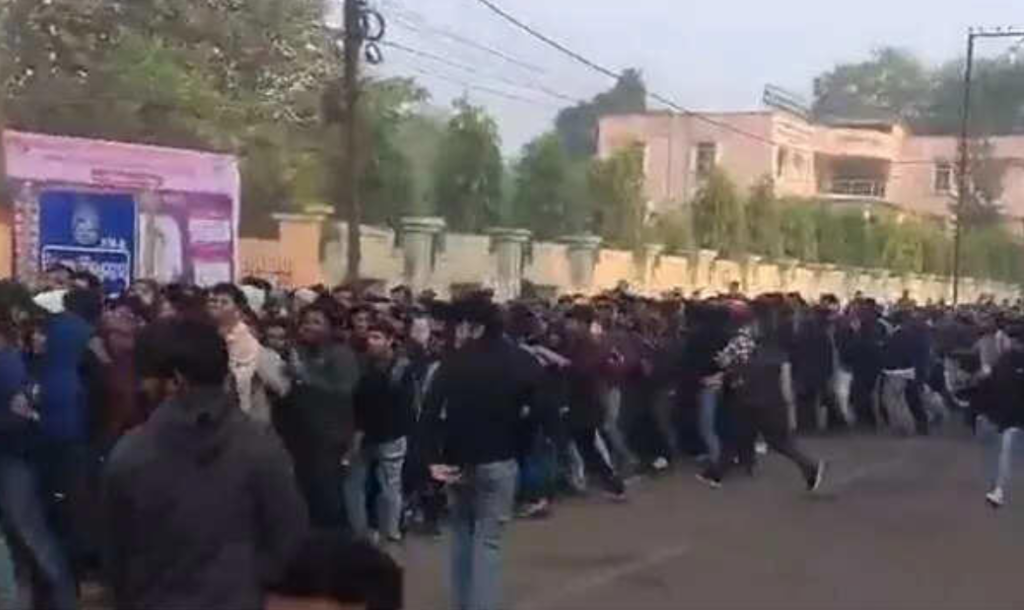

The crisp morning air in Cuttack barely calmed the restless energy swelling outside the gates of Barabati Stadium, as thousands of cricket lovers — some arriving before dawn — queued up for tickets to the first T20I between India and South Africa. Lines stretched far beyond the ticket counters, a sea of fans waiting eagerly, hopeful that they might secure a coveted pass to witness their heroes in action.
But as soon as the ticket counters opened, order collapsed. Where once stood disciplined lines, a stampede erupted — people sprinted forward, pushing past others, squeezing through gaps, and even breaking queues to get ahead.
Videos of the fracas quickly went viral, showing fans jostling, stumbling, and clamouring toward the counters in a desperate rush. The rush wasn’t merely energetic: it bordered on chaotic.
Many social-media users didn’t mince words. “VIPs get passes; fans get chaos,” one observer wrote on X, voicing widespread frustration that a large portion of the stadium’s 41,000 seats seemed already earmarked for passes and VIPs. With only around 20,000 tickets made available to the public — and even fewer released online — it never seemed like the common fan stood much of a chance.
Authorities had made efforts: serpentine barricades were installed to order the lines, and heavy police deployment with CCTV coverage was planned to prevent overcrowding and black-market sales. But the enthusiasm of the crowd overwhelmed the arrangements the moment the gates opened. Fans who had stood hours — some even overnight — watching line after line merge into a blur of human press and frantic movement.
For many, what was supposed to be the thrilling beginning of an international cricket extravaganza turned into a worrying reminder of mismanagement and misplaced priorities. While no major injuries were reported this time, the images and videos sparked concern: if such scenes can erupt before a match even begins, what might the actual stadium entry or post-match exit look like?